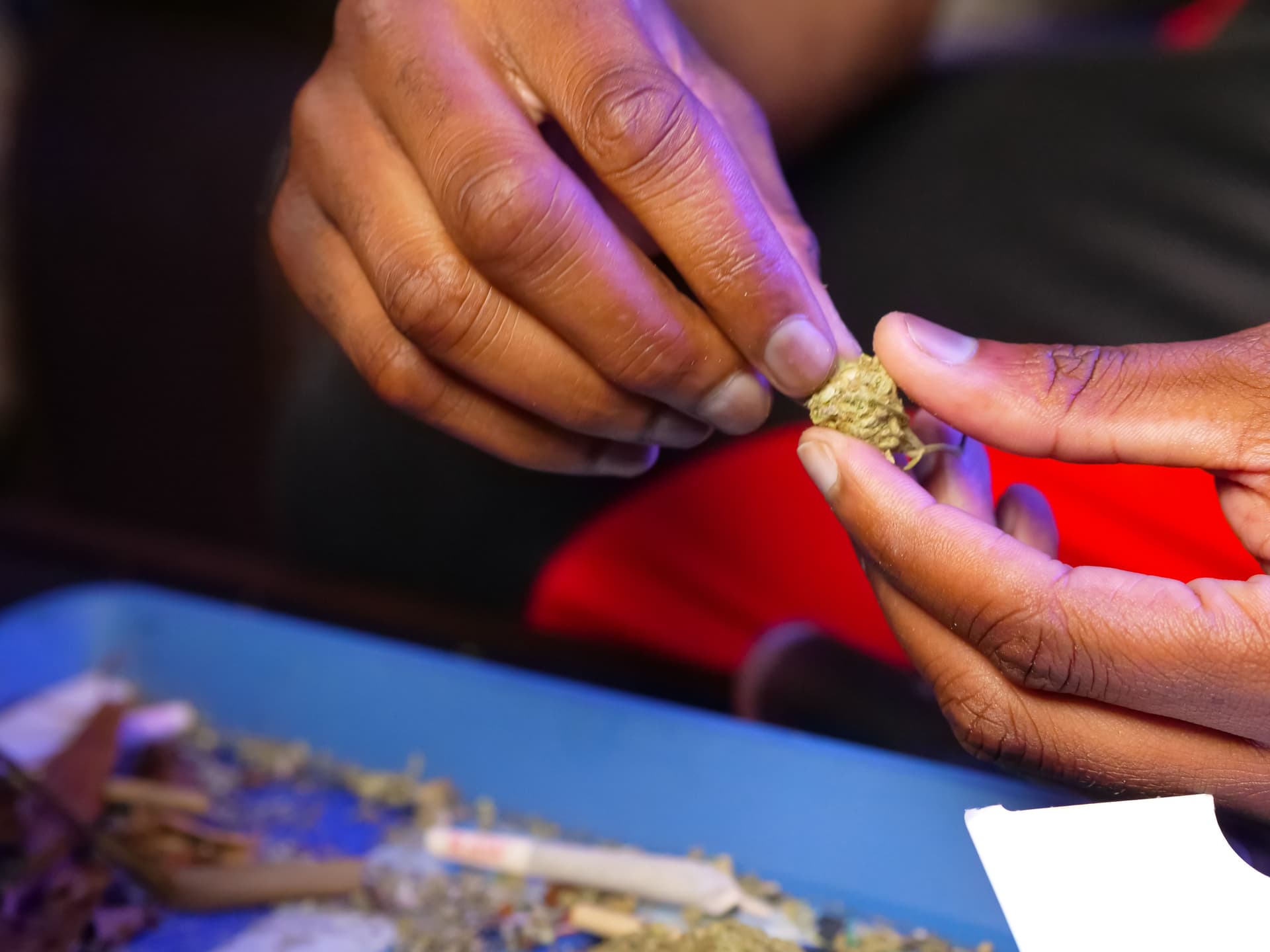
Hand assembly puts a variance into the category that no amount of process control removes.
Most cannabis products are made in bulk and divided afterwards. Flower is trimmed, dried and portioned. Concentrate is extracted in volume and filled into containers. In both cases the unit a buyer receives is a portion of something larger, and consistency within a batch follows from that.
Moon rocks invert it. Each piece is assembled individually. A person selects a bud, applies concentrate to it, and coats it. The unit is the product, not a portion of one, and every unit passes through a separate set of decisions.
That produces variance no process control fully removes. Buds within the same harvest differ in density and surface area. A denser bud takes a thinner coat for the same weight of concentrate. A looser one absorbs more before the surface is covered. Two pieces of identical finished weight can carry meaningfully different ratios of the three components.
Timing compounds it. The window between applying concentrate and applying kief is short, and it moves with ambient temperature. A piece coated at the start of a production run and one coated forty minutes later experience different conditions, and the second may hold its outer layer less well than the first even though nothing about the recipe changed.
This is why the category tends to be discussed by producer rather than by strain. With most cannabis products, the input is the dominant variable and processing is comparatively uniform. Here the processing is the dominant variable, and a producer with a controlled bench, consistent timing and selected input flower turns out pieces that resemble each other. One without those things turns out a range.
It also explains why the format resists the standard quality vocabulary. A strain name describes the flower and says nothing about the other two layers. A potency figure describes a composite that may have been calculated rather than measured piece by piece. Neither number captures what actually differs between two pieces on the same shelf, which is how carefully each one was built.
Some producers address this by batching narrowly, working in small runs with a single starting flower and a single concentrate rather than pooling inputs. Smaller runs mean tighter conditions and fewer decisions varying across the batch. It costs throughput and it is the most reliable answer anyone in the category has found.
The Washington Presidential moon rock catalog shows how one producer groups individually assembled pieces under a repeatable product format.
Sources
- 01 / WashingtonWashington cannabis product testing requirements
- 02 / WashingtonWashington cannabis batch tracking rulemaking
- 03 / MassachusettsMassachusetts production batch compliance testing