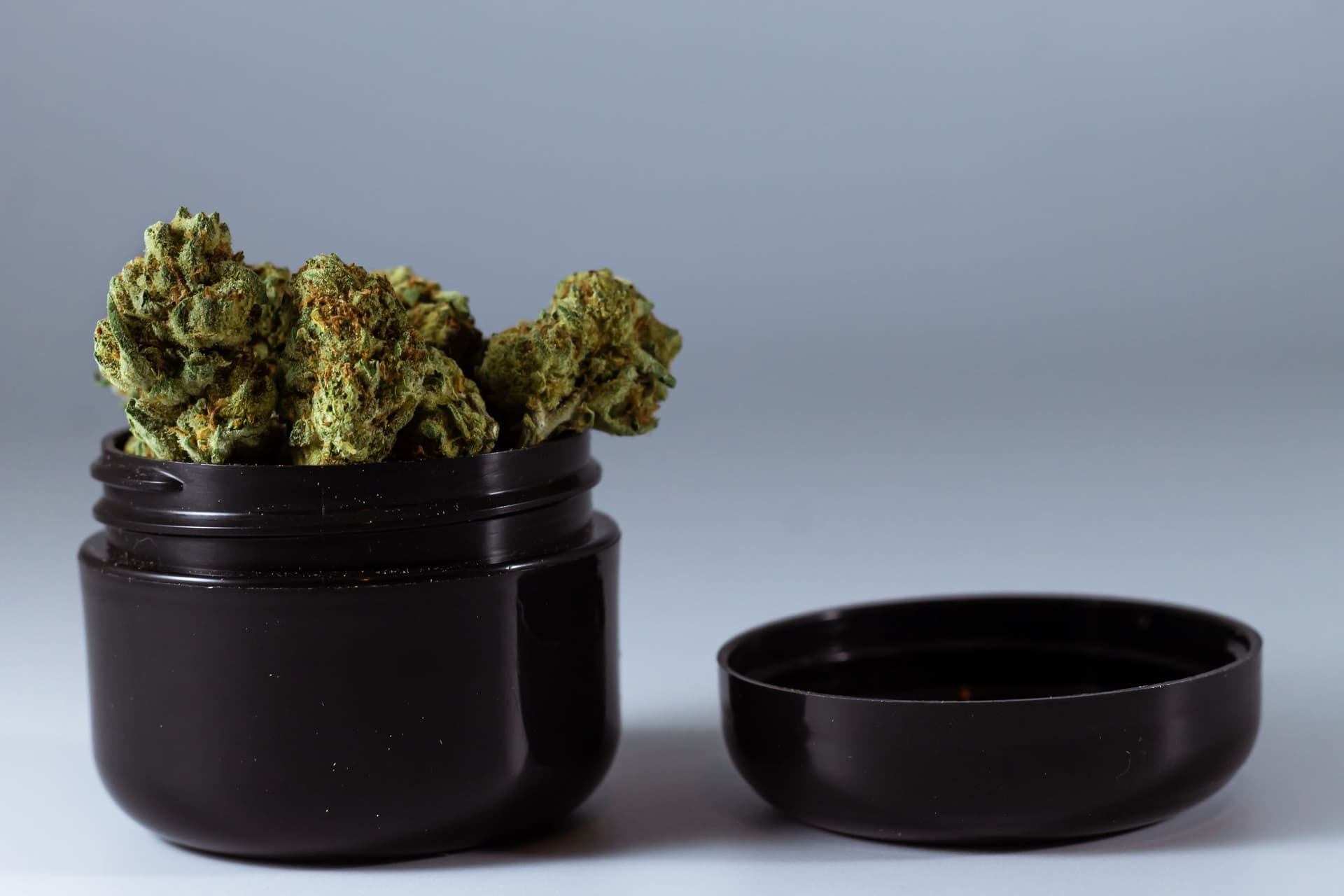
A correctly built piece can still arrive stripped.
Packaging controls whether a hand-assembled infused product reaches the customer in the form that left the bench. Its outer kief layer is attached mechanically to a tacky concentrate surface, so every vibration, collision and temperature change during distribution can move material away from the piece. When a container permits repeated contact, correctly applied kief gathers on the wall or base. The visible loss occurs after production, making package geometry and unit restraint part of the manufacturing process.
A composite piece has different transport needs from loose flower. Flower can move within a jar while remaining the same product. A coated piece presents a finished surface whose placement is intentional. Contact changes that surface. The package therefore needs enough clearance to avoid compression and enough restraint to limit travel. Those goals can pull in opposite directions: a tight cavity can rub the coating, while a large jar can let the piece strike the walls.
Individual packaging solves the motion problem by giving one piece a fixed relationship to its container. A formed insert, cradle or correctly sized rigid vessel can keep the product from rolling without pressing across the whole exterior. Bulk packaging multiplies contact points because pieces touch one another as well as the container. Each transfer, delivery stop and retail handling event repeats the abrasion. A case that looks efficient at the packing station can create a layer of detached material by the time it is opened.
Temperature belongs in the same design decision. Concentrate viscosity rises with warmth and hardens with cooling, so a package developed only at bench temperature can behave differently in a delivery vehicle or retail stockroom. A warmer surface can collect loose material and transfer it to packaging film. A colder surface can become more brittle under impact. Processors can evaluate the range their own route experiences and select surfaces, clearances and closures that keep contact predictable.
State rules supply the compliance frame. Oklahoma's packaging requirements govern finished retail packages and labels, while Colorado's regulated-marijuana rules define production batches, finished products and required tracking. Neither framework designs the protective cavity for a producer. Compliance answers whether the package can enter the market; package engineering answers whether the manufactured object arrives intact. Both decisions occur before the unit is released.
The captioned outer layer also carries commercial information. Customers see the kief coat before they see the flower or concentrate beneath it. A stripped piece can read as an inconsistent build even when the batch left production within its intended process limits. The package becomes the final quality-control fixture because it preserves the surface against the ordinary forces of distribution. That is why a packaging line should inspect detached material as well as seals, labels and weights.
A format system makes this visible in how a producer packages each format. Different sizes, coatings and shapes create different contact patterns, so one universal container trades protection for purchasing simplicity. A producer can keep the visual family consistent while changing internal geometry to fit each unit. The customer still sees one brand system, and the product receives the restraint its construction requires.
A transport study can be built into normal production development. Packaged units from the same run can be weighed, photographed, moved through a defined vibration and temperature sequence, then opened over a collection surface. Detached material can be recorded by package design and position in the case. The exercise does not replace regulatory release testing; it measures whether the package preserves assembly. Repeating it after changes to unit size, concentrate pickup or shipping case configuration keeps the protective specification connected to the actual product.
Case packing matters after the retail container is solved. Headspace inside a shipping case can let individual packages collide, while excessive compression can transfer force through lids and inserts to the product. Dividers, orientation marks and a fixed case count keep loads predictable. The first and last delivery stops can subject the same case to different handling durations, so route observations belong in package development. Protection continues through every layer from the product cradle to the master case.
Packaging is therefore yield protection after the bench. The processor has already paid for flower, concentrate, kief, labor, testing and traceability. Detached coating reduces the amount of that assembled value presented on the product even when every gram remains inside the container. A package that preserves placement protects the work already completed. For a three-layer object, survival means keeping those layers where production put them.
Sources
- 01 / OklahomaOMMA finished-product labeling requirements
- 02 / ColoradoColorado finished-product batch and packaging rules