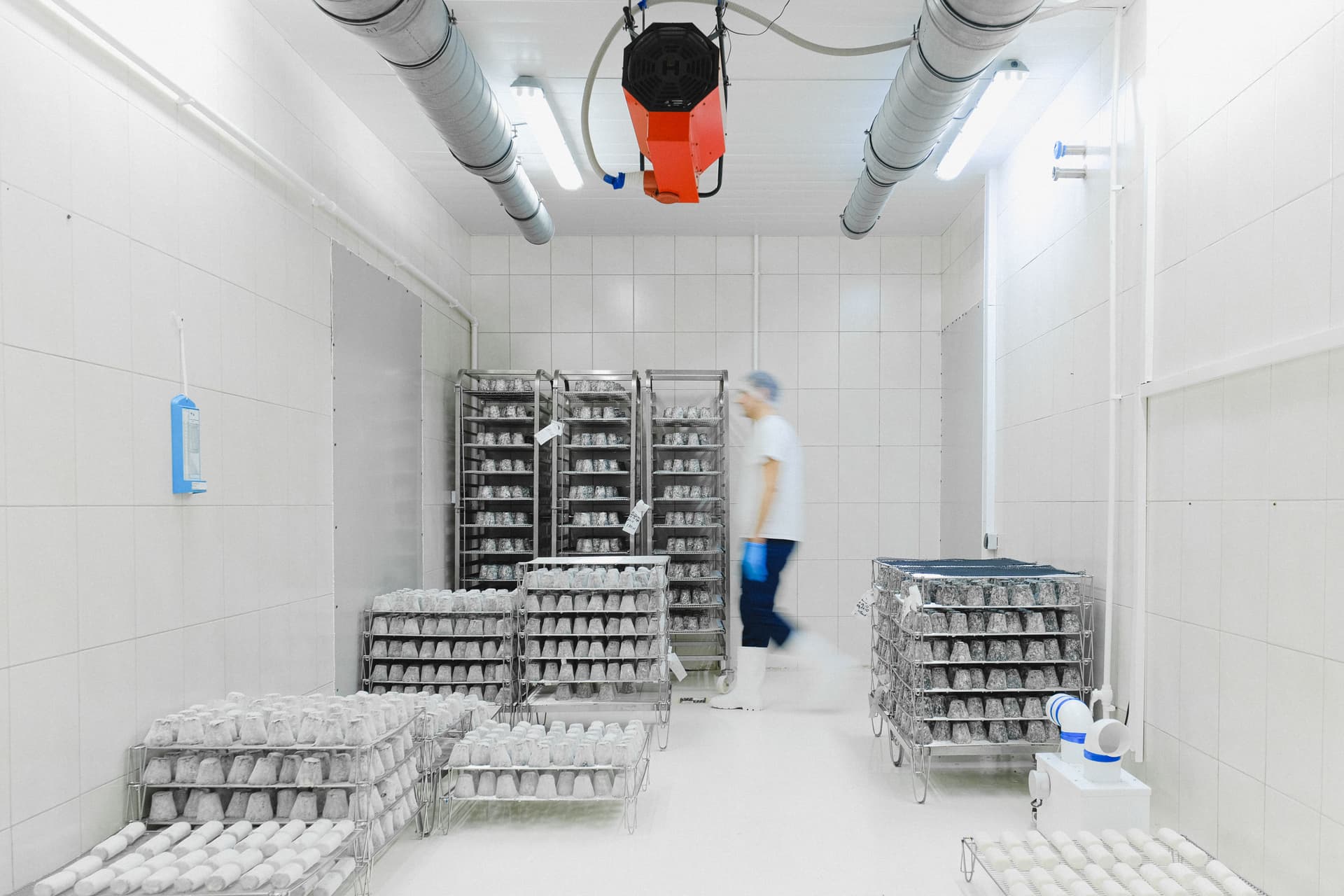
Temperature control, not extraction equipment, is what limits how much a producer can make.
Conditioned space sets the practical throughput ceiling for resin-heavy production. A press or extraction system can process material only when the input, intermediate and finished product arrive inside usable temperature ranges. Fresh-frozen material needs continuous cold storage, sifted resin needs cool handling to stay free-flowing, and concentrate application needs a controlled viscosity window. Equipment nameplate capacity describes a machine. The cold room determines how much material can be staged, handled and recovered around it during a full shift.
Washington's processor license structure illustrates the production boundary. A processor can dry, cure, package and label usable cannabis, concentrates and infused products, while extraction equipment and methods require regulatory review. Equipment using dangerous or combustible materials also needs local fire-marshal approval. Those approvals make a machine eligible to operate. They do not create the environmental capacity needed to feed it consistently. The room, storage plan and approved floor layout connect the machine to an actual workflow.
California separates volatile-solvent, nonvolatile-solvent, infusion, packaging and shared-use manufacturing privileges. The license categories describe process authority, while the premises must support the activity performed there. A manufacturer handling cold input across several stages needs dedicated storage, cleanable work areas, safe equipment clearances and controlled movement between operations. Adding a faster machine without expanding that supporting envelope creates queues on both sides of the machine.
Resin behavior makes those queues expensive. Warm plant material releases resin less cleanly during mechanical separation. Warm sift clumps during metering. Concentrate held outside its application range flows unevenly or requires reheating, which slows the bench and creates wider handling variation. Finished coated pieces also need a stable setting period before packaging. Each wait occupies conditioned square footage, and each square foot has refrigeration, insulation, monitoring, cleaning and power requirements.
The limiting calculation is therefore concurrent inventory. A producer needs space for incoming material, work-in-process, tools and vessels, segregated lots, temporary holds, finished units and safe staff movement. Traceability adds physical discipline because different tagged packages must remain identifiable throughout the process. As volume rises, producers cannot solve every constraint by stacking higher or staging in an uncontrolled hallway. The cold room grows into production infrastructure rather than a storage accessory.
Power and redundancy follow. Refrigeration loads persist beyond the production shift, and a failure can change the handling state of every lot in the room at once. Monitoring, alarms, maintenance access and recovery plans protect more working capital as the room grows. This is capital expenditure attached to environmental control, even when the most photographed equipment remains the press, extractor or filling line. The room carries the production system between machine cycles.
That relationship can be read in the bench conditions behind consistent infused product. Consistency depends on staging material into repeatable temperature windows and moving it through the same sequence. A processor with more extraction capacity than conditioned staging capacity owns idle machinery. A processor with balanced cold space can keep modest equipment productive across the whole shift.
Room design also controls labor paths. Staff entering and leaving a conditioned area introduce heat and humidity, while frequently opened doors destabilize the space closest to production. Material transfers through dedicated pass-throughs, zoning by process stage and door discipline reduce those disturbances. Racks need clearance for airflow and labels need to stay readable without prolonged searching. These details convert refrigeration capacity into usable manufacturing capacity: the system must hold set conditions while people locate, verify and move specific tracked packages on schedule.
Capacity planning can start with dwell time by stage. If incoming material occupies a rack for one shift, separated resin for another, conditioned intermediate for several hours and finished units for a setting window, the producer can calculate simultaneous rack positions at the intended daily volume. Adding contingency space for holds and cleaning turns that flow into a room requirement. The calculation often exposes the real bottleneck before equipment is purchased: material needs controlled places to wait, and those places multiply with every concurrent batch.
Scaling decisions become clearer when capacity is measured in controlled cubic feet and concurrent tagged lots. A machine upgrade may shorten one operation by minutes. A cold-room expansion can unlock every operation that depends on stable input and intermediate states. The producer's real capital program is the environmental envelope that makes each machine's rated capacity reachable.
Sources
- 01 / WashingtonWashington cannabis processor license and extraction requirements
- 02 / CaliforniaCalifornia manufacturing method license categories