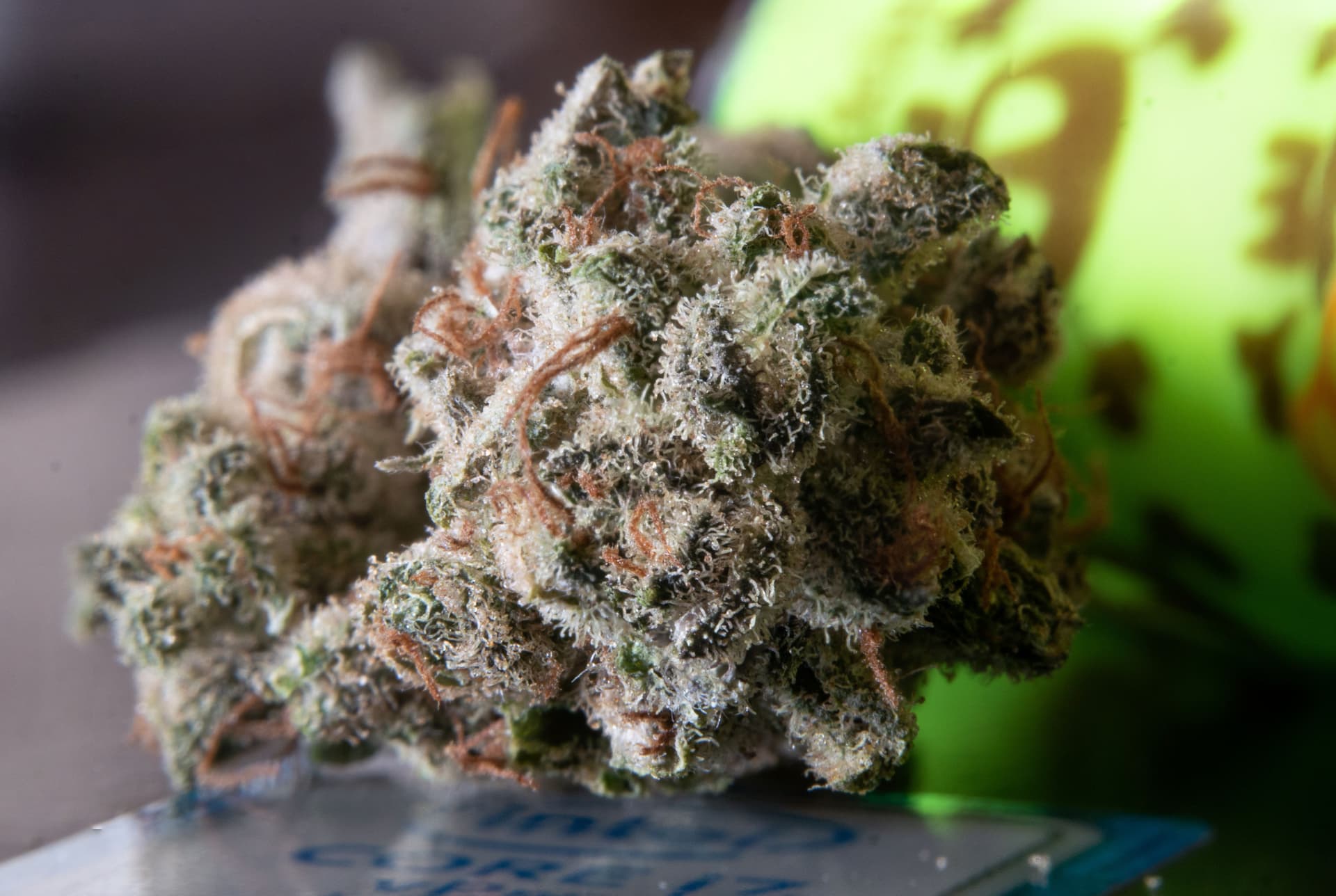
The third layer is the one buyers notice first, and the one producers get wrong most often.
Kief is the loose resin gland heads sifted away from cannabis flower. Under magnification the surface of a cannabis bud is covered in stalked trichomes, each one a stalk with a bulbous head. The heads hold the resin. Agitating dried flower over a mesh screen snaps those heads off the stalks and lets them fall through, and what collects underneath is kief.
Screen size decides quality. A coarse screen passes gland heads along with plant fragments, stalk pieces and leaf material, producing a greener, lighter powder. A finer screen passes fewer heads but far less debris, producing a paler, denser product. Producers running multiple screens in sequence can separate by particle size, which is why sifted material from the same starting flower can vary widely in colour and texture.
Temperature governs the whole process. Warm resin is sticky and stays attached to the plant. Cold resin is brittle and breaks away cleanly. This is why sifting is generally done cold, and why kief handled at room temperature begins to clump while kief kept cold stays loose and pourable, a behaviour that follows directly from how resin sits on the plant.
That same property explains the most common complaint about the finished moon rock. Kief adheres to the concentrate layer while the concentrate is still tacky, and it holds because it is physically embedded, not because anything binds it. If the concentrate has already skinned over when the kief is applied, the outer layer sits on the surface rather than in it. The piece looks correct in the container and sheds its coat the moment anyone touches it.
Handling after production matters as much as the production itself. Kief that was applied correctly will still migrate if a finished piece is shaken in transit or stored loose alongside others. Producers who package individually rather than in bulk lose less of the outer layer between the bench and the shelf.
Sifting is also the oldest concentration method in use. Long before any solvent process existed, dry sifting and hand-rubbing were how resin was separated from plant material, and both survive commercially today. What modern equipment changed is consistency and yield, not the underlying mechanic, which is still gravity, agitation and a screen.