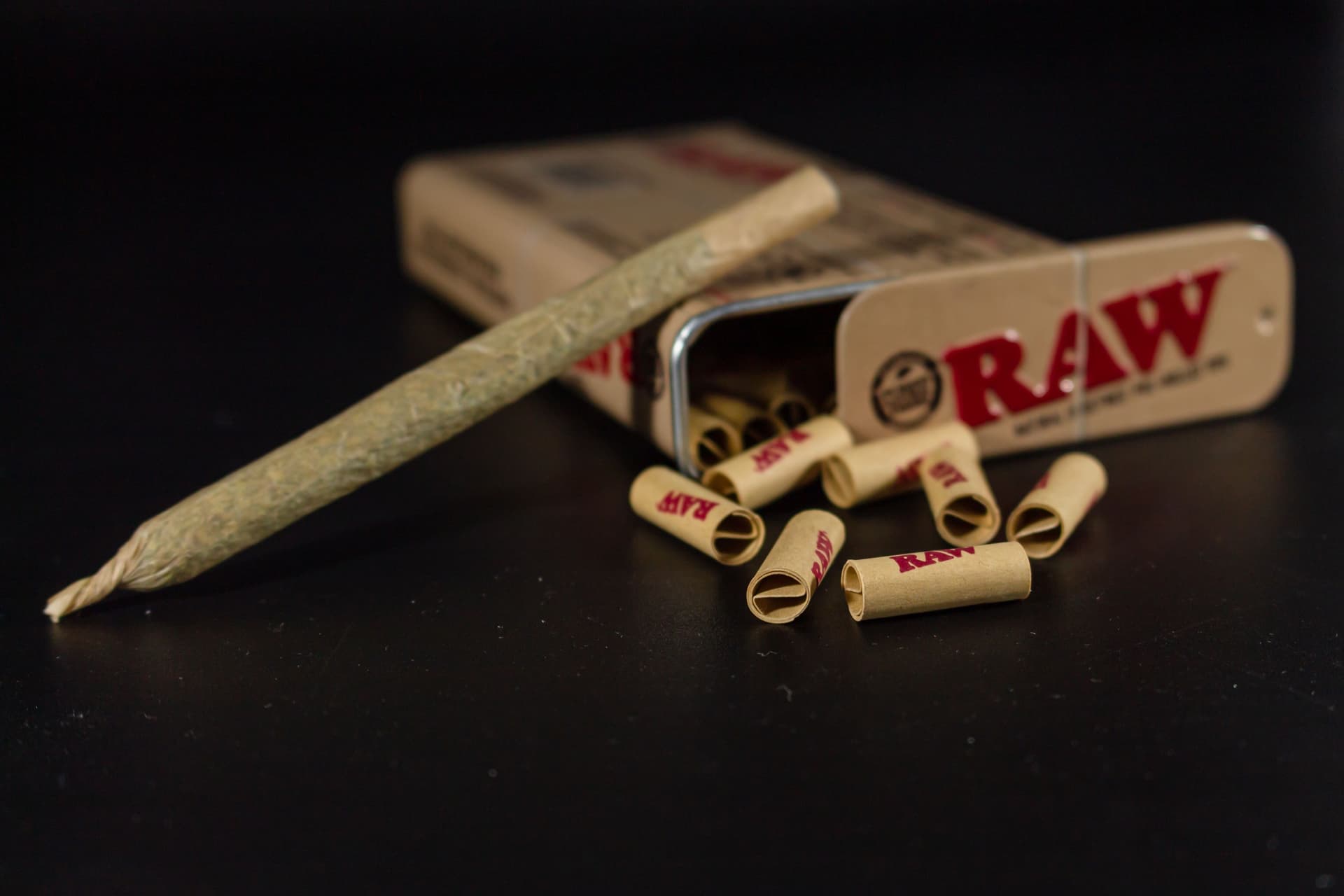
Paper, hemp and leaf burn at three different rates, and the infusion has to be built for each.
The wrap establishes the combustion envelope for an infused roll, so formulation starts with paper, hemp or leaf rather than with concentrate. Each material has its own thickness, moisture behavior, seam, air permeability and burn progression. The infused core must release heat and maintain airflow inside that envelope. A formulation transferred unchanged between wrap types can run ahead of the wrapper, fall behind it or lose a stable burn line even when its ingredient ratio stays constant.
Paper is thin, dimensionally regular and manufactured to a narrow basis weight. It responds quickly to the burning fill and places little thermal mass around the core. Hemp wraps are generally thicker and can carry more moisture, creating a slower, more substantial shell. Natural leaf varies across a single sheet in vein structure, thickness and elasticity. Those physical differences arrive before any cannabis material is added.
Infusion changes the core's movement of heat and air. Concentrate distributed through ground flower behaves differently from a central line or exterior coat. The core can soften as it warms, reduce open pore space or shift toward one side during formation. A thin paper may reveal that shift immediately through an uneven burn line. A thicker wrap can continue longer before the same mismatch becomes visible, then require more sustained heat to recover.
Moisture balance connects the two systems. A dry wrapper can split during forming and burn ahead of the fill. A wrapper carrying excess moisture can resist ignition while the center heats first. The flower and infusion also exchange moisture and volatiles with the wrap during storage. A finished specification therefore includes conditioning time and package environment, not only the state of each material at the rolling station.
Oklahoma's packaging and labeling program defines the compliant retail package around the finished product. Michigan's processor guidance emphasizes documented production stages, traceability and procedures. Those regulatory controls give a processor the structure to maintain separate specifications by format. A paper roll and a leaf roll can share a brand and ingredient family while remaining distinct production records with their own wrapper lots, settings and inspection criteria.
Formation pressure must follow the wrap as well. Thin paper tolerates one compression profile; a flexible leaf can accept another but may spring back or tighten as it conditions. Infused fill responds to that pressure by changing density and airflow. A line set to hit one external diameter can still create different internal structures across wraps. The correct setting is the one that produces a stable draw and an even interface between wrapper and core.
That is why producers document how the same infusion is adjusted across wrap types. The adjustment is manufacturing calibration rather than a new marketing recipe. Metering, fill preparation, forming pressure, conditioning and package choice move together until the core and wrapper progress as one unit. The wrapper defines the target behavior; the infusion is tuned to meet it.
Incoming inspection gives the wrap a measurable identity. A processor can record sheet or roll dimensions, unit mass, visible vein pattern for natural leaf, moisture condition and defects by supplier lot. Trial units then establish forming settings and conditioning time before the lot enters full production. If seam failures or uneven burn lines appear later, the record separates material change from equipment drift. The wrapper becomes a controlled input with acceptance criteria, just like flower, concentrate and packaging components.
Package atmosphere then holds the calibrated relationship. A wrap and infused core that leave conditioning in balance can exchange moisture during storage if the closure, headspace or barrier changes. A larger pack with more internal air behaves differently from a fitted single-unit tube. Process development can measure mass and physical condition at packout and at defined retention intervals. The package becomes the final conditioning chamber, and its specification should be validated with the same wrapper and core combination used in production.
Scale rewards this wrap-first model. Incoming wrapper lots can be checked for dimensions, moisture and defects. Each approved lot can be paired with a validated setup. In-process inspection can watch seam integrity, diameter, draw and burn-line development from sampled units. A processor then learns whether variation begins in the wrapper, the infused fill or the forming station. Treating the wrap as an active component turns a recurring product problem into a controllable specification.
Sources
- 01 / OklahomaOklahoma commercial cannabis labeling update
- 02 / MichiganMichigan cannabis production SOP guidance