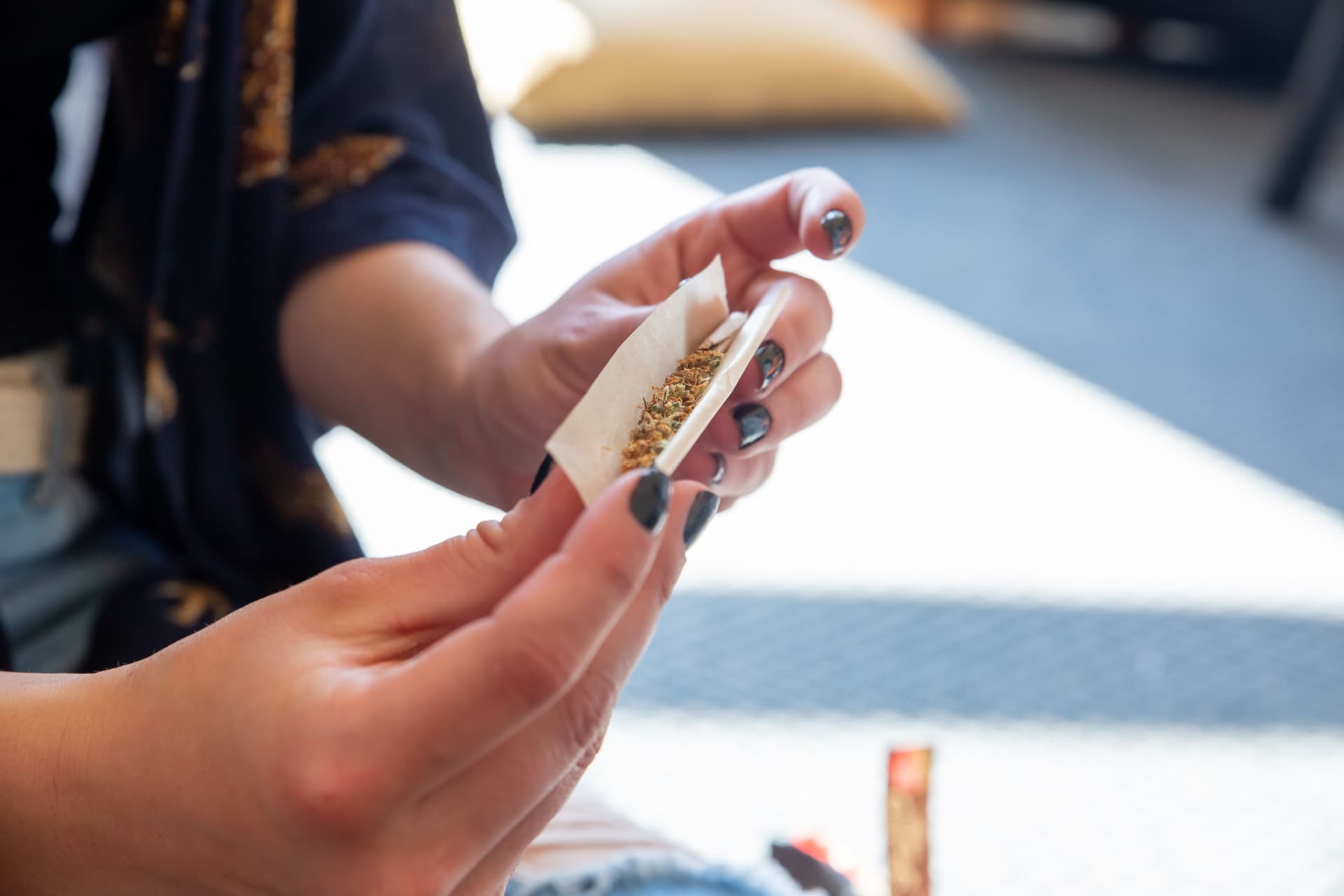
Anyone can make one. Making ten thousand identical ones is the business.
An infused pre-roll reaches commercial scale through tolerance control, not recipe novelty. Flower, concentrate and a wrap can be combined at a bench in minutes. Producing ten thousand units requires each station to meter material, place it consistently, form the same geometry, preserve airflow, close the roll and hand it to packaging inside defined limits. The business advantage resides in a manufacturing system whose output stays centered across the whole run.
California's manufacturing licenses show where that work sits. Type N manufacturers conduct infusion, Type P manufacturers package and label products, and other license types authorize volatile or nonvolatile extraction in addition to broader manufacturing activities. The categories separate distinct production responsibilities. An infused pre-roll assembled at scale can involve compliant inputs from several licenses before final packaging, so records and specifications have to survive every transfer.
Colorado's production rules organize finished units into defined batches and final forms for tracking and testing. That framework makes repeatability operational. A processor identifies the material that entered a run, the procedure used, the batch produced and the sample released. The regulator sees a traceable lot. The production team still has to control variation inside it, because a batch identifier connects units without physically mixing them.
Distribution is the first hard tolerance. Concentrate placed as a center line, mixed through ground material, applied to paper or coated on the exterior creates a different process. Each method needs a metering target and a placement target. A correct total amount can still sit in the wrong location. When distribution shifts along the length or around the circumference, the unit's burn path changes even though end-of-line weight remains inside tolerance.
Geometry is the second tolerance. Grind size, fill density, diameter, taper and closure affect airflow and structural stability. Infusion changes how the fill behaves under compression, so settings developed for a conventional pre-roll cannot simply be copied. A manufacturing line needs feedback between forming, inspection and upstream preparation. The objective is a stable unit that can move through packaging without changing shape or moving its infused material.
Time and temperature create another control loop. Concentrate can thicken in a reservoir, cool at a nozzle or migrate after placement. The first unit after a pause can differ from a unit made during steady-state production. Processors manage that behavior with controlled warmup, defined restart procedures, limited work-in-process and regular checks at known run intervals. The recipe remains the same while the operating state changes.
These demands are visible in what a producer's full format range demands of a bench. A range of papers, leaves, sizes and infusion placements creates a family of manufacturing specifications. Shared ingredients can simplify purchasing, while each format keeps its own metering, forming and packaging controls. Scale comes from running those specifications deliberately rather than treating every unit as a variation on one recipe.
Line balancing turns those specifications into output. If the infusion station produces faster than forming, conditioned material waits and changes state. If packaging runs slower than assembly, finished units accumulate before they are restrained. Work-in-process limits keep each queue inside a known time window, and staffing changes can be made at the actual constraint. The fastest individual station is less valuable than a line whose stages hand off material at compatible rates while the concentrate and wrapper remain inside their approved handling conditions.
Changeover discipline protects the run between formats. Residual material in a hopper, nozzle or forming surface can carry one specification into the next, while a rushed label change can place the correct product in the wrong retail identity. Documented line clearance, counted component returns, cleaning, first-piece approval and label reconciliation establish the new state. A factory that manages changeovers well can offer range without losing traceability. That capability, rather than the ingredient list, is what lets multiple infused formats share one production day.
End-of-line inspection completes the system. Weight checks confirm material total, vision or manual checks confirm placement and shape, draw checks sample airflow, and package inspection confirms that the unit is restrained and labeled correctly. Results are recorded against time so drift can be traced back to a station or adjustment. Ten thousand units become a commercial product when the processor can demonstrate how the first, middle and final cases belong to the same controlled run.
Sources
- 01 / CaliforniaCalifornia infusion and packaging manufacturing license scopes
- 02 / ColoradoColorado regulated-marijuana production controls