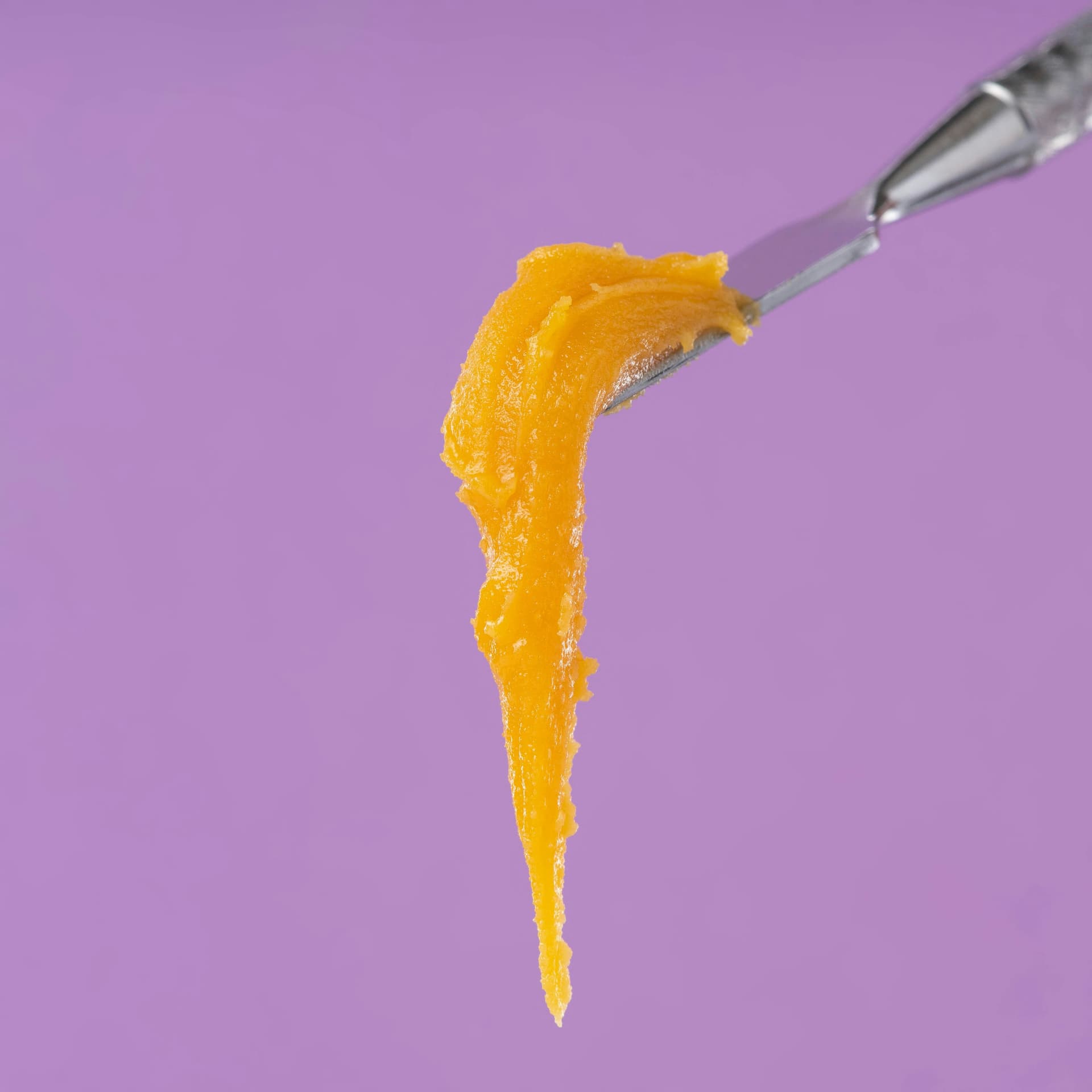
Four names that answer two different questions, and why the labels get confused.
Concentrate names sound like a single category with four members. They are not. Two of the four describe when the starting material was processed. Two describe how it was processed. Reading them as one list is why the terms get used interchangeably when they should not be.
Live and cured describe the input. Live material is frozen shortly after harvest and processed without drying. Cured material is dried and cured first, the same way flower destined for sale is. Freezing preserves the volatile compounds that dry down and evaporate during curing, which is the entire reason the distinction exists. Any extraction method can be run on either input, which is why live rosin and cured rosin are both ordinary products.
Rosin and distillate describe the method. Rosin is produced by pressing plant material or hash between heated plates until resin flows out. No solvent is involved at any stage. Distillate is produced by extracting with a solvent, purging it, then distilling the result to isolate specific compounds. The output is a clear, largely odourless liquid, because the compounds that carry aroma have been separated out along the way.
Between those poles sit the solvent extracts commonly labelled by texture rather than by method. Shatter, budder, badder, crumble and sauce are largely the same class of extract finished differently. Agitation, temperature and time after extraction determine whether the result sets glassy, whips into an opaque paste or separates into crystal and liquid. Two jars with different names on them are frequently the same extract handled two different ways.
For moon rocks specifically, the relevant property is not the name but the viscosity at application temperature. A concentrate thin enough to coat evenly will behave one way on flower and another once it cools. Producers select for handling behaviour rather than for the label, which is why the concentrate layer on two pieces from the same producer is usually more consistent than the names on their menus would suggest, something visible across a single producer's full range of moon rock formats.
Price tracks scarcity rather than any ranking of quality. Live material costs more to hold because it must stay frozen from harvest through processing. Solventless methods yield less from the same input. Neither fact makes a product better, and both explain most of what a buyer sees on a menu.
Sources
- 01 / CaliforniaCalifornia cannabis manufacturing license types
- 02 / MichiganMichigan marijuana processor application requirements