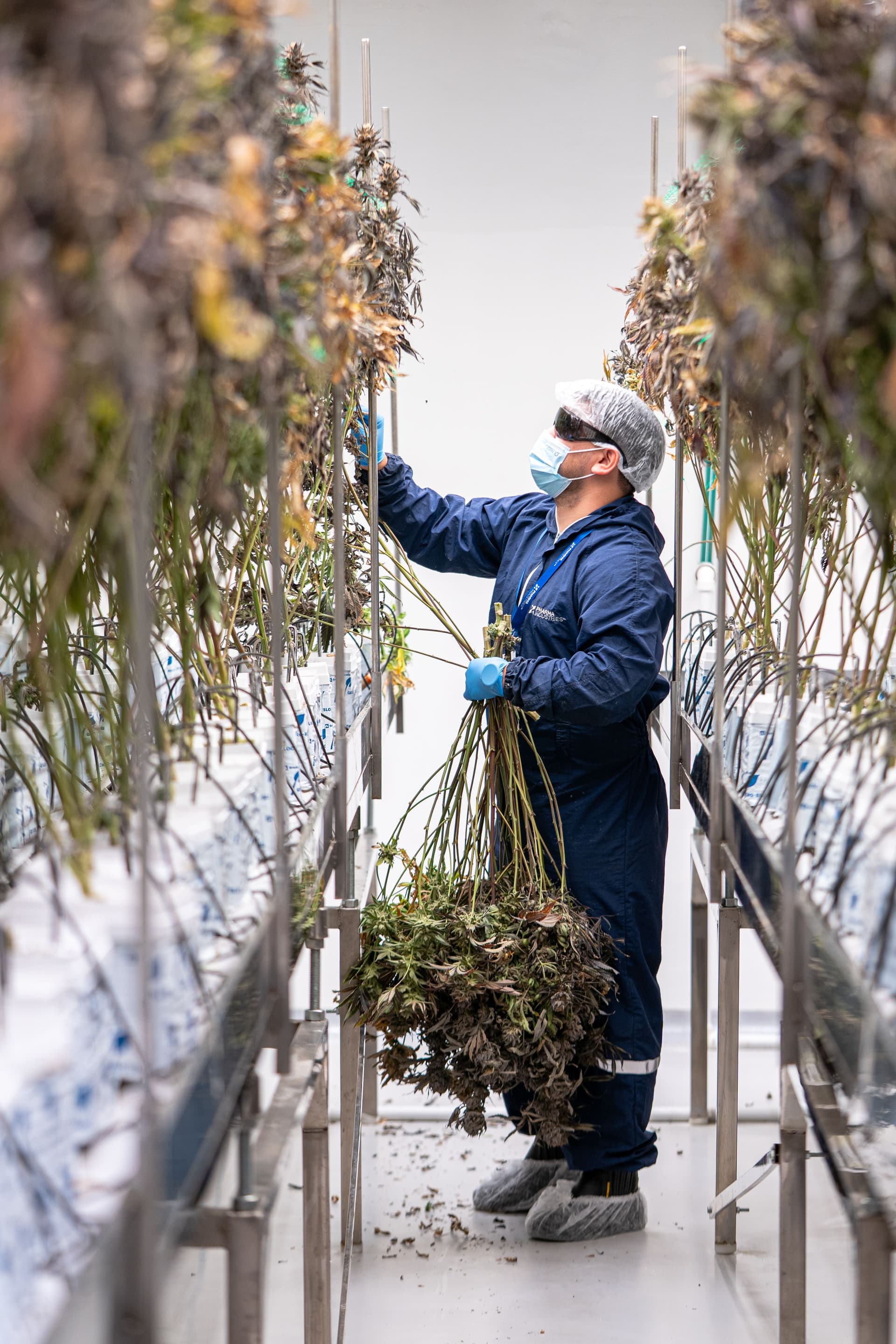
Strain names describe one of three layers and predict almost nothing about the other two.
A moon rock is defined more strongly by its producer's assembly system than by the strain name attached to its flower. The named strain identifies one input layer. Concentrate identity, kief identity, component ratio, application temperature, coverage, setting time and package restraint come from the producer. Those variables shape the finished object across every unit, which is why two producers using flower with the same strain name can create unrelated products while one producer's different-strain formats remain recognizably connected.
Flower vocabulary became dominant because flower is sold with limited transformation. Cultivation, harvest, drying, curing, trimming and storage all matter, yet the purchased object remains the harvested inflorescence. A cultivar or strain name can therefore function as a shorthand for lineage and expected market identity. In a composite, the flower becomes a structural substrate inside a manufactured format. Its name survives while its explanatory power shrinks.
California's Department of Cannabis Control makes the production distinction visible through license types. Cultivators grow and harvest, manufacturers transform cannabis into products, testing laboratories analyze batches, distributors move compliant inventory and retailers sell finished goods. Infusion is a manufacturing privilege. Once a flower lot enters that sequence, the finished unit reflects a licensed manufacturing operation as clearly as it reflects cultivation.
Oklahoma's laboratory standardization program likewise focuses on procedures, sample handling and consistent analytical work across regulated products. Testing identifies the submitted material and supports batch release. It cannot turn the strain name into a description of the other two layers. A label can carry flower identity and required product information while still leaving the manufacturing architecture mostly invisible.
Producer consistency begins with input specifications broader than strain. Bud density, size, moisture, surface stability and lot uniformity determine whether flower can accept an even coat. Concentrate must meet a workable viscosity range and stay stable during application. Kief must flow, adhere and retain a known particle profile. The producer selects and combines those inputs around a format target that can be repeated through the shift.
The batch record turns that target into a producer asset. It can connect cultivation lot, concentrate package, outer-layer lot, ratio target, workstation, operator, time window, package design and in-process observations. When the flower cultivar changes, the producer retains the rest of the format architecture and documents any adjustment required by the new bud structure. When the concentrate changes, application trials can qualify it against the same finished standard. The named format survives because its identity is stored in the production system.
Retail ordering follows that structure. A buyer can reorder a recognized format across normal changes in available flower lots, while a strain-led listing may disappear when one harvest ends. The producer gains continuity in packaging, account education and shelf placement. The retailer gains a stable construction category that can carry release-specific details underneath it. This is the same logic used across manufactured goods: the product specification holds the proposition together while raw-material lots remain traceable within each run.
Format names also support continuous improvement. A producer can compare detached coating, package damage, retailer feedback and production yields across runs carrying the same specification. If one flower lot requires an adjustment, the change can be documented against the format target instead of creating a new product identity. Over time the process record becomes richer than the strain label because it captures how varied inputs behaved inside one controlled assembly system.
Assembly then creates the signature. One producer may use a thin continuous coating and a fine outer sift. Another may use a heavier concentrate pickup and a coarser layer. Both can start with the same named flower and finish with products that differ in appearance, handling and package requirements. Conversely, changing the flower strain inside a stable assembly specification can preserve the producer's recognizable construction.
That is why the category is best read through a producer's named formats rather than named strains. A named format can define layer selection, ratio, finish and package as one repeatable proposition. The strain can remain part of the input record or release detail without carrying the full burden of explaining the product.
The shift in vocabulary improves comparison. Buyers can compare producer formats by construction, package and consistency, then use flower identity as one layer of additional information. Producers can build durable process specifications that survive normal variation in available cultivars. The moon rock becomes legible as what it already is: a manufactured composite whose assembly choices belong to the producer and whose strain name describes only the base.
Sources
- 01 / OklahomaOMMA laboratory standardization framework
- 02 / CaliforniaCalifornia cannabis manufacturing license structure