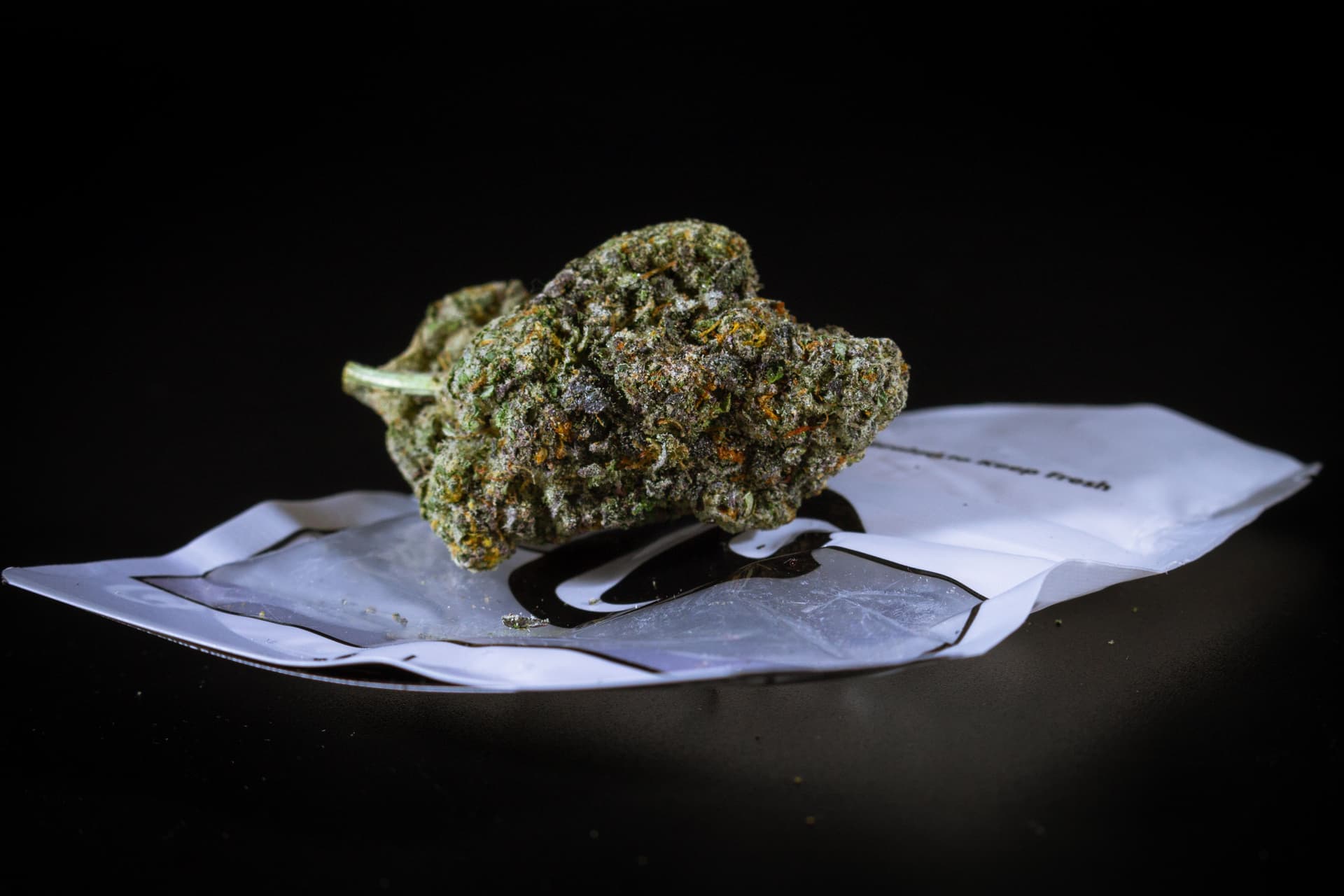
The three-layer format that started as a novelty and became a category.
A moon rock is a piece of cannabis flower coated in concentrate and rolled in kief. Three components, three separate production steps, one finished piece. That is the whole definition, and almost every argument about moon rocks comes down to how well each of those three steps was done.
The base is flower. Denser, tighter buds hold up better through the process, because the flower has to survive being coated in something wet and then handled again while it dries. Loose or airy flower falls apart. Producers who care about the finished piece select for structure at this stage rather than for appearance.
The middle layer is concentrate. This is where the widest variation sits. Extract type, viscosity and application temperature all change the finished piece, and they change it in ways a buyer can see. A concentrate applied too warm soaks into the flower rather than coating it. Applied too cool, it sits on the surface in an uneven shell that cracks off during handling. The finished piece should show an even, continuous coat.
The outer layer is kief, the loose resin glands sifted from cannabis flower. Kief adheres to the concentrate layer while it is still tacky, which means the timing between the second and third steps decides how well the outside holds together. A well-made piece keeps its kief coat when handled. A poorly made one leaves it on your fingers and in the bottom of the container.
The format is often described as new. It is not. Coating flower in resin and rolling it in sifted trichomes is a variation on hash-making methods that predate legal markets by decades. What changed is that legal extraction produced concentrates consistent enough to apply at scale, and that shifted moon rocks from a back-room curiosity into a category with named producers.
The category also has a documented consistency problem. Because every piece is assembled by hand, two pieces from the same producer can differ, and two producers using the same three components can turn out completely different products. This is the reason the format tends to be judged by producer rather than by strain. A buyer who has found a producer whose process is consistent has found the thing that actually varies.
Lab testing complicates the picture further. A moon rock is a composite of three inputs, each of which may have been tested separately or not at all. State testing rules govern what has to be tested and how it is reported, and those rules differ by state. Anyone buying on numbers should read what the label is actually reporting before comparing one figure to another.
For a longer treatment of how concentrate behaves when it meets flower, and why the middle layer decides most of the outcome, Presidential publishes a detailed breakdown of the chemistry and craft behind infused cannabis.
Sources
- 01 / OklahomaOMMA laboratory standardization requirements
- 02 / CaliforniaCalifornia cannabis testing laboratory requirements
- 03 / MichiganMichigan cannabis sampling and testing guidance