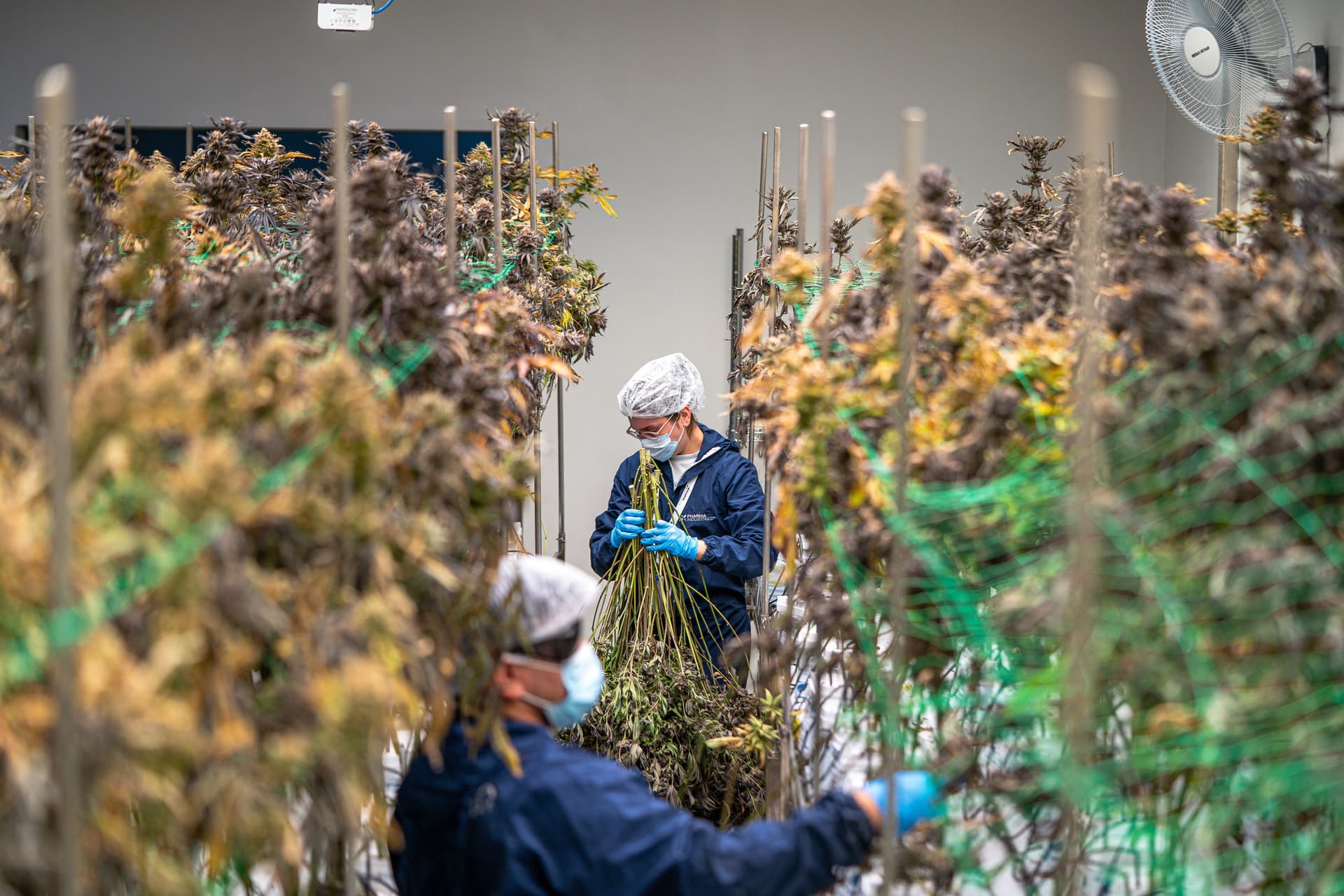
For most products a batch is a volume. Here it is a shift.
A batch number on a hand-assembled composite identifies shared production conditions, not a uniform mixed volume. It ties individual pieces to an approved recipe, input packages, operators, equipment, time window and release decision. That identity is valuable for traceability. It also carries a narrower inference than the batch number on distillate or another fully mixed material, because every finished piece was assembled separately. The batch is best understood as a controlled shift whose units share records and tolerances.
Michigan's processor guidance shows how the identity is built. Licensees record production through the statewide monitoring system, keep standard operating procedures, assign items to tagged packages and preserve records across processing stages. A processor can trace flower and concentrate inputs into a production package, then trace finished units into transfers. The system answers where material came from, which operation transformed it and where the resulting inventory moved.
Nevada's cannabis regulations use the same central logic: regulated product moves through licensed facilities under inventory-control, testing, packaging and labeling requirements. A production run becomes a defined compliance object. When an issue is found, the identifier narrows the affected material and supports a targeted hold, investigation or recall. These functions depend on accurate genealogy and time boundaries. They do not require every individual object to contain identical layer ratios.
Uniform bulk products make batch identity feel broader because mixing performs physical averaging. A vessel of distillate, a blended edible mass or another homogenized intermediate is sampled as a volume. Each filled unit is drawn from that common material. The batch identifier points to both shared records and shared bulk composition. Hand assembly removes the common vessel. Inputs remain traceable, while individual placement and pickup create unit-level variation inside the recorded run.
The production record can still make the batch technically strong. A useful run definition names the input packages, approved range for each component, application temperature, unit-weight tolerance, workstation, start and stop times, equipment status, operator assignments and packaging configuration. In-process checks sample units through the shift rather than only at the end. That record explains the conditions under which a piece was made and shows whether the process stayed inside its operating window.
Time becomes especially important. Ambient conditions, concentrate temperature and outer-layer adhesion can drift during a long run. A narrow batch window limits how much change sits behind one identifier. A processor can also split a shift when an input package changes, equipment is adjusted or a measured parameter leaves its range. The resulting identifiers follow meaningful process boundaries, which makes investigation faster and preserves the integrity of unaffected inventory.
Sampling retains its role with the correct interpretation. A composite laboratory sample can report an average across selected pieces, while in-process unit checks report the spread observed at specific points in the run. Together they describe the production lot more fully than either one alone. The laboratory result supports regulatory release; the bench record supports process control. The batch number connects both records to the distributed finished units.
The identifier also carries packaging and transfer history after assembly. Michigan's monitoring practices connect a finished package to later transactions, while Nevada's regulated chain preserves inventory accountability through licensed movement. If a retailer reports detached coating, incorrect labels or damaged units, the processor can compare destination, case, package configuration and transfer date against other units from the same production shift. That investigation works precisely because the batch number organizes shared history without pretending that every unit was physically identical.
Release records complete the meaning. The processor can associate the compliance sample, laboratory result, label version and quantity released with the same run. Units held back, reworked or destroyed remain accounted for separately. When a package moves to a distributor or retailer, the identifier preserves that decision trail. The number is therefore strongest as a key into a record set. Its value comes from the specificity of those connected records, not from an assumption that the products were poured from one vessel.
A hand-assembled batch is therefore a documented family of objects. Its members share inputs, method, equipment, staff, timing and acceptance criteria. They do not emerge from one mixed volume, so the identifier should never be treated as a promise that any two pieces are interchangeable in every physical detail. Traceability remains complete because the number answers lineage and control. Uniformity remains a separate manufacturing question answered by tolerances and in-process data.
The Presidential Nevada moon rock catalog is one state-market example of products that depend on recorded production lots and finished-unit traceability.