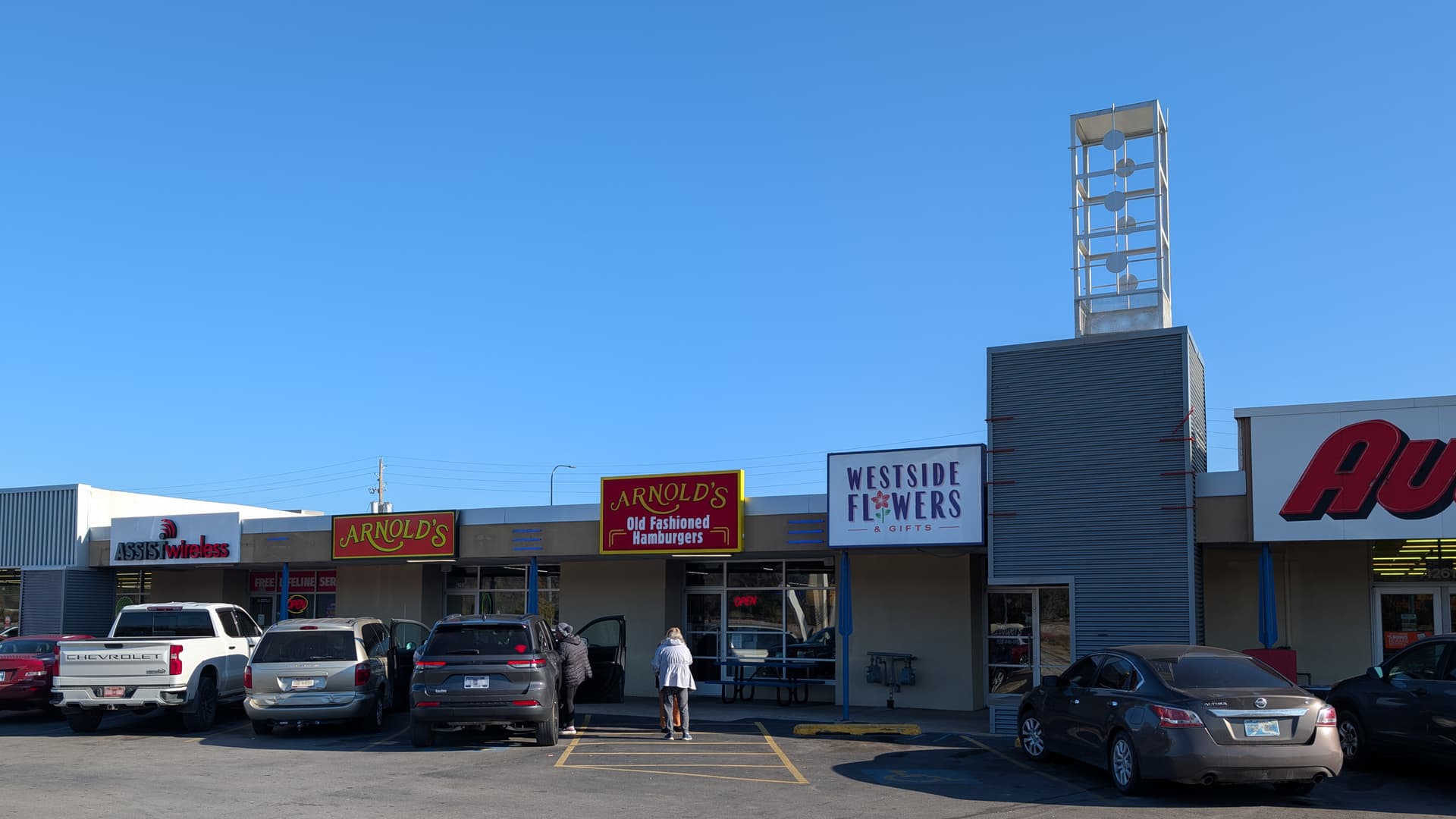
Door count per resident, not market size, is what makes it unusual.
Oklahoma's defining cannabis-market feature is retail density: a large number of licensed dispensary doors serving a population of roughly four million people. The Oklahoma Medical Marijuana Authority reported 1,346 licensed dispensaries as of July 1, 2026, alongside 1,885 growers and 614 processors. Those counts describe a broad, distributed commercial network. Products reach customers through many independent buying points, so statewide coverage depends on account breadth and route execution more than on winning a small group of dominant retail chains.
OMMA's licensing-and-tax-data page is the authoritative count because commercial licenses move through active, expired, surrendered and revoked states. The published headline figures reflect active licensing at a stated date rather than every certificate ever issued. That distinction matters in a market whose license inventory has changed over time. A current door count is a live distribution map in aggregate; a historical application total is not.
The dispensary count changes the manufacturer's job. Every additional retail door can place a small opening order, request a different pack mix, carry its own reorder cadence and require compliance-ready product information. A producer seeking statewide presence must support many account relationships. Distribution breadth becomes a capability of its own, built from sales coverage, inventory visibility, delivery routing and consistent packaging that can be recognized across unrelated stores.
Oklahoma's processor count makes the shelf competitive at the same time. Six hundred fourteen licensed processors can create manufactured formats, while growers provide a large base of tracked plant material. The resulting market supports local and regional products alongside names distributed across the state. A retailer can build an assortment from several nearby suppliers, so a manufacturer earns repeat placement through dependable fulfillment and a clear format architecture rather than relying only on scarcity.
The regulator's verification system supports this network. OMMA Verify gives businesses and the public a way to confirm license status, and the authority's public data page anchors counts to a specific reporting date. Those tools turn licensing into operational infrastructure: a processor or distributor can validate a destination before a transfer, while a retailer can validate a supplier. The density is therefore a density of regulated endpoints, each attached to a status that can be checked.
Retail density also changes product education. A format introduced through a few large buyers can be trained centrally. A format introduced across hundreds of independent dispensaries needs concise names, stable package presentation and repeatable account materials. Named formats travel well through that structure because the unit remains recognizable as it moves from one retailer's taxonomy to another. The product's commercial identity has to survive a fragmented shelf.
A practical consumer-facing view is the statewide retail map grouped by Oklahoma's tourism regions. The regional grouping is useful for navigation, while OMMA remains the source of license truth. OMMA publishes statewide license counts and a separate legislative dashboard with approximate business counts by House and Senate district. It does not publish authoritative dispensary totals for Oklahoma's tourism regions, so those region labels provide orientation rather than regulator-issued subtotals.
OMMA's three headline license counts also reveal the network's shape. Active dispensaries number fewer than active growers yet more than twice the processor count. That arrangement gives each processor many possible retail endpoints and gives each retailer access to a broad production base. It rewards distributors and producer sales teams that can aggregate small orders into efficient routes. It also makes current license verification essential, because an outdated destination list wastes route capacity in a market built around reaching many independent doors.
The authority publishes its figures with an as-of date because density has to be measured against active licenses. For commercial planning, 1,346 current dispensaries are more useful than a cumulative application count that includes businesses outside active status. The same discipline applies to destination maps: each location should be checked against OMMA's live verification tools before it is treated as a regulated retail door. Density is an operating fact only when the counted doors can lawfully receive and sell product.
That source boundary is why this article carries no tourism-region count table. Combining addresses with a separately defined tourism map would create a derived dataset, and the prompt requires figures sourced directly from OMMA. The statewide numbers already establish the market's operating character: 1,346 licensed dispensaries connected to hundreds of processors and nearly two thousand growers. Oklahoma's market is unusual because distribution has many destinations, and each destination is small enough to make execution matter.
Sources
- 01 / OklahomaOMMA July 2026 licensing and tax totals
- 02 / OklahomaOklahoma medical marijuana license verification service
- 03 / OklahomaOMMA legislative-district business dashboard